
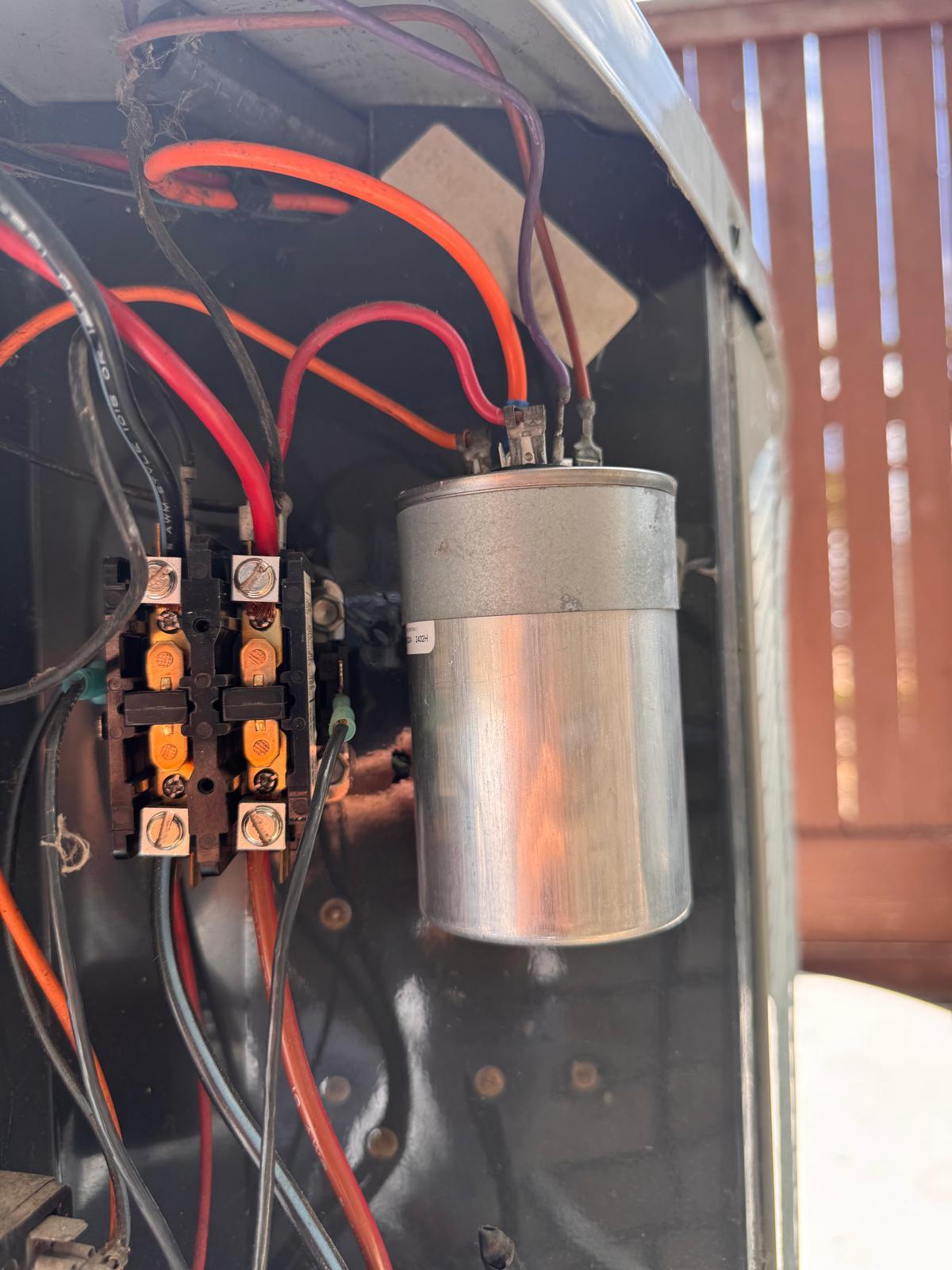
The repair vs. replace decision is one of the most significant financial choices facing Houston business owners. A commercial HVAC system represents a $15,000 to $100,000+ investment, and the timing of replacement dramatically impacts your total cost of ownership. Replace too early, and you've wasted years of remaining equipment life. Replace too late, and you've poured money into repairs, suffered unnecessary downtime, and paid inflated energy bills that could have funded new equipment.
This comprehensive guide provides the analytical framework to make this decision confidently. We'll examine the key factors—equipment age, repair history, efficiency losses, refrigerant concerns, and business impact—and show you how to calculate when replacement becomes the smarter financial choice. Whether you're facing a major repair decision today or planning for the future, this guide arms you with the knowledge to make the right call for your Houston business.
At HVAC247PRO, we've helped hundreds of Houston businesses navigate this decision over our 15+ years in commercial HVAC. We're committed to honest assessments—sometimes repair makes sense, sometimes it doesn't. This guide shares our evaluation methodology so you can make informed decisions, whether working with us or another contractor.
Commercial HVAC Equipment Lifespan: What to Expect
Understanding typical equipment lifespans provides the foundation for replacement decisions. These figures represent properly maintained equipment under normal operating conditions.
Expected Lifespan by Equipment Type
| Equipment Type | Average Lifespan | Houston-Adjusted* | Replacement Cost Range |
|---|---|---|---|
| Rooftop Unit (RTU) | 15-20 years | 12-17 years | $8,000-$30,000+ per unit |
| Split System (Commercial) | 15-20 years | 12-18 years | $10,000-$25,000 |
| Chiller (Air-Cooled) | 15-20 years | 12-18 years | $50,000-$200,000+ |
| Chiller (Water-Cooled) | 20-30 years | 18-25 years | $100,000-$500,000+ |
| Boiler (Commercial) | 20-35 years | 20-30 years | $15,000-$100,000+ |
| Air Handler | 15-25 years | 15-22 years | $5,000-$20,000 |
| Cooling Tower | 15-25 years | 12-20 years | $20,000-$100,000+ |
| VRF/VRV System | 15-20 years | 15-20 years | $15,000-$80,000+ |
*Houston-Adjusted accounts for extreme cooling demand, high humidity, coastal air quality, and year-round operation that accelerates wear on HVAC equipment.
Factors That Shorten Equipment Life
- Inadequate maintenance: Reduces lifespan by 25-50%
- Oversized or undersized equipment: Short cycling or constant operation accelerates wear
- Poor installation: Improper refrigerant charge, inadequate airflow, electrical issues
- Harsh environment: Salt air, industrial contaminants, extreme temperatures
- Extended operating hours: 24/7 operations wear equipment faster
- Deferred repairs: Small problems become major failures
Factors That Extend Equipment Life
- Regular preventive maintenance: Can add 5-10 years to equipment life
- Quality installation: Proper sizing, refrigerant charge, and airflow
- Premium equipment: Commercial-grade components last longer
- Clean environment: Filtered air, clean coils, protected equipment
- Prompt repairs: Addressing issues before they cascade
Warning Signs Your Commercial HVAC System Needs Replacement
These indicators suggest your system may be approaching end-of-life, making replacement worth serious consideration.
Critical Warning Signs (Replacement Likely Needed)
Strong Replacement Indicators
- Cracked heat exchanger: Safety hazard, typically not worth repairing in older units
- Multiple compressor failures: Second compressor failure usually signals system-wide issues
- Refrigerant leak in coil: Coil replacement often exceeds 50% of system value
- Major component failures after 15+ years: More failures likely to follow
- R-22 system needing major repair: Refrigerant scarcity compounds repair economics
Moderate Warning Signs (Evaluate Carefully)
- Increasing repair frequency: More than 2-3 significant repairs per year
- Rising energy bills: 20%+ increase not explained by rate changes or occupancy
- Inconsistent temperatures: Hot/cold spots that weren't present when system was newer
- Excessive noise: New or worsening sounds indicating mechanical wear
- Poor humidity control: System struggling to manage Houston's humidity
- Declining air quality: More dust, allergens, or odors despite filter changes
- Extended run times: System runs constantly without reaching setpoint
Early Warning Signs (Begin Planning)
- System approaching 10-12 years: Begin budgeting for replacement
- Parts becoming harder to source: Obsolescence approaching
- Efficiency noticeably declining: Compare to original specifications
- Building needs changing: Current system may not meet future requirements
- Technology advances: New options offer significant advantages
The 50% Rule and When to Apply It
The 50% rule is the most commonly cited guideline for repair vs. replace decisions, but it requires proper application.
The Basic 50% Rule
The Standard Formula
If Repair Cost > 50% of Replacement Cost AND System Age > 50% of Expected Lifespan, Consider Replacement
Example: A 12-year-old RTU (expected life: 15-20 years) needs a $4,000 repair. Replacement cost: $15,000. Repair is 27% of replacement, but system is 60-80% through its lifespan. This is borderline—consider other factors.
When the 50% Rule Suggests Repair
| Scenario | Repair Cost | % of Replacement | System Age | Recommendation |
|---|---|---|---|---|
| 5-ton RTU, motor failure | $800 | 5% | 8 years | Repair |
| 10-ton split, control board | $1,200 | 6% | 10 years | Repair |
| 15-ton RTU, compressor | $4,500 | 18% | 7 years | Repair |
When the 50% Rule Suggests Replacement
| Scenario | Repair Cost | % of Replacement | System Age | Recommendation |
|---|---|---|---|---|
| 5-ton RTU, compressor (R-22) | $5,000 | 33% | 18 years | Replace |
| 10-ton split, evap coil + compressor | $8,500 | 42% | 14 years | Replace |
| 20-ton RTU, heat exchanger | $6,000 | 20% | 17 years | Replace |
Limitations of the 50% Rule
The 50% rule provides a starting point but doesn't capture everything:
- Doesn't account for energy savings: New equipment may pay for itself through efficiency
- Ignores repair history: Recent repairs increase effective investment in old equipment
- Overlooks reliability value: New systems are less likely to fail unexpectedly
- Misses tax incentives: Incentives can shift the economics significantly
- Doesn't consider financing: Monthly payments may be less than ongoing repair costs
Total Cost of Ownership Analysis
A proper repair vs. replace analysis considers all costs over a defined time horizon, not just the immediate repair.
Costs to Include in Your Analysis
| Cost Category | Repair Scenario | Replace Scenario |
|---|---|---|
| Immediate Cost | Current repair | New equipment + installation |
| Future Repairs (5-year projection) | Estimate based on age/condition | Minimal (warranty coverage) |
| Energy Costs (5-year projection) | Current efficiency (or declining) | Improved efficiency (20-40% savings) |
| Downtime Costs | Higher risk of unexpected failures | Lower risk, new warranty |
| Maintenance Costs | Increasing with age | Standard maintenance |
| Tax Benefits | None | Section 179, 179D, credits |
Sample 5-Year Cost Comparison
Consider a 15-year-old 10-ton R-22 rooftop unit needing a $4,500 compressor repair:
Repair Scenario
- Compressor repair: $4,500
- Projected repairs (5 years): $6,000
- R-22 recharges: $3,000
- Energy cost (inefficient): $42,000
- Downtime risk: $2,000
- 5-Year Total: $57,500
Replace Scenario
- New 16 SEER RTU: $18,000
- Installation: $4,000
- Projected repairs: $500
- Energy cost (efficient): $29,400
- Section 179 tax savings: -$5,500
- 5-Year Total: $46,400
In this example, replacement saves $11,100 over 5 years while providing better reliability, comfort, and warranty coverage.
Energy Efficiency Comparison
Efficiency improvements alone can justify replacement for older equipment:
| System Age | Typical SEER | New System SEER | Efficiency Gain | Annual Savings* |
|---|---|---|---|---|
| 20+ years | 8-10 SEER | 16+ SEER | 60-100% | $3,000-$6,000 |
| 15-20 years | 10-12 SEER | 16+ SEER | 33-60% | $2,000-$4,000 |
| 10-15 years | 12-14 SEER | 16+ SEER | 14-33% | $1,000-$2,500 |
*Based on 10-ton commercial system in Houston climate with typical operating hours
R-22 Systems: The Replacement Imperative
If your commercial HVAC system uses R-22 refrigerant, replacement has become increasingly urgent due to the refrigerant phase-out.
The R-22 Situation
- Production ended January 1, 2020: No new R-22 can be manufactured or imported
- Supply is reclaimed/stockpiled only: Available quantities declining annually
- Current prices: $100-$200+ per pound (was $15-$30 in 2015)
- Future prices: Expected to continue rising as supply depletes
- Parts availability: Components for R-22 systems becoming scarce
Options for R-22 Systems
| Option | Cost | Pros | Cons |
|---|---|---|---|
| Continue with R-22 | Repair + refrigerant costs | No upfront investment | Rising costs, supply risk, efficiency loss |
| Retrofit to R-407C | $2,000-$5,000 | Extends system life, available refrigerant | 5-10% efficiency loss, not all systems compatible |
| Replace with R-410A system | Full system cost | Best efficiency, modern technology, long-term solution | Higher upfront cost |
When R-22 System Replacement Becomes Urgent
Replace R-22 Systems When
- System develops refrigerant leak requiring significant recharge
- Major component (compressor, coil) fails
- System is 15+ years old
- Multiple repairs have been needed in recent years
- R-22 cost for a recharge exceeds $500-$1,000
For most R-22 systems, the question isn't whether to replace, but when. Proactive replacement allows you to choose timing, equipment, and contractor rather than making emergency decisions.
Tax Incentives and Financial Benefits of Replacement
Substantial tax incentives can offset 30-50% of commercial HVAC replacement costs, dramatically improving the financial case for new equipment.
Section 179 Deduction
Section 179 allows immediate expensing of qualifying HVAC equipment:
- 2025-2026 Deduction Limit: $1,160,000
- Phase-Out Threshold: $2,890,000
- Qualifying Equipment: Rooftop units, split systems, chillers, boilers
- Benefit: Deduct full equipment cost in year of purchase
Section 179 Example
Your business purchases a $40,000 commercial HVAC system. At a 25% effective tax rate, Section 179 provides $10,000 in first-year tax savings—effectively reducing the system cost to $30,000.
179D Commercial Building Deduction
The 179D deduction rewards energy-efficient building improvements:
- Base Deduction: $0.50-$1.00 per square foot for 25-50% energy savings
- Maximum Deduction: Up to $5.00 per square foot for 50%+ savings
- Prevailing Wage Bonus: 5x multiplier when using contractors paying prevailing wages
Energy Efficiency Tax Credits
The Inflation Reduction Act provides additional incentives:
- Investment Tax Credit (ITC): Up to 30% for qualifying efficiency improvements
- Bonus credits: Additional percentages for domestic content, energy communities
Texas-Specific Incentives
- Property Tax Exemptions: Available for certain energy-efficient installations
- Utility Rebates: CenterPoint and other utilities offer efficiency rebates
- PACE Financing: Commercial Property Assessed Clean Energy available in Houston
Maximize Your Tax Benefits
Work with your CPA before purchasing commercial HVAC equipment. Proper documentation, timing, and equipment selection can significantly increase tax benefits. Some businesses save 30-50% of equipment cost through combined incentives.
Planning Your Commercial HVAC Replacement
Proactive replacement planning provides better outcomes than emergency decisions.
Replacement Planning Timeline
| When | Action | Benefit |
|---|---|---|
| 3-5 Years Before | Begin budgeting, assess system condition | Avoid financial surprise |
| 1-2 Years Before | Evaluate options, get preliminary quotes | Informed decision-making |
| 6-12 Months Before | Final equipment selection, contractor selection | Best equipment availability |
| 3-6 Months Before | Finalize contracts, schedule installation | Preferred scheduling |
| Installation | Choose optimal timing (spring/fall) | Minimal business disruption |
Choosing the Right Replacement System
Consider these factors when selecting replacement equipment:
- Proper sizing: Based on current building loads (may differ from original)
- Efficiency tier: Balance upfront cost against energy savings
- Technology features: Variable speed, smart controls, zoning capabilities
- Maintenance requirements: Some systems require more specialized service
- Warranty coverage: Length and what's included varies significantly
- Contractor support: Ensure local service availability for chosen brand
Best Time to Replace in Houston
- Optimal: March-April or October-November (mild weather, less demand)
- Acceptable: Any time except peak summer heat
- Avoid if possible: June-August (emergency timing, higher prices, limited availability)
HVAC247PRO Replacement Assessment Process
We provide comprehensive evaluations to help you make the right decision:
Our Assessment Includes
- Complete system inspection: Current condition of all components
- Efficiency testing: How system performs vs. original specifications
- Repair history review: Pattern analysis of past failures
- Remaining life estimate: Based on condition and maintenance history
- Load calculation: Verify current sizing is appropriate
- Repair vs. replace analysis: Side-by-side cost comparison
- Replacement options: Multiple equipment tiers with pricing
- Financing options: Including available incentives
Our Commitment to Honest Assessment
HVAC247PRO doesn't push replacement when repair makes sense. We provide:
- Transparent analysis: Show our work, not just recommendations
- Multiple options: Repair, partial upgrade, and full replacement scenarios
- Long-term perspective: What's best for your business, not our revenue
- Written documentation: Take your time, get other opinions if desired
Frequently Asked Questions: HVAC Replacement
How long should a commercial HVAC system last?
Commercial HVAC systems typically last 15-20 years with proper maintenance, though this varies by equipment type. Rooftop units average 15-20 years, split systems 15-20 years, chillers 20-30 years, and boilers 20-35 years. In Houston's demanding climate with year-round cooling demands, systems often reach end-of-life closer to the lower end of these ranges. Well-maintained equipment can exceed these averages, while neglected systems may fail significantly earlier.
What is the 50% rule for HVAC replacement?
The 50% rule suggests replacing your HVAC system when repair costs exceed 50% of the replacement value, particularly if the system is more than halfway through its expected lifespan. For example, if a 12-year-old system worth $15,000 to replace needs a $8,000 compressor repair, replacement likely makes more financial sense. This rule accounts for the diminishing returns of investing in aging equipment and the benefits of newer, more efficient technology.
Should I replace my R-22 commercial HVAC system?
R-22 (Freon) production ended in 2020, making replacement increasingly urgent for systems using this refrigerant. R-22 now costs $100-$200+ per pound and availability is declining. While R-22 systems can be retrofitted to alternative refrigerants (R-407C) or continue operating on reclaimed R-22, replacement with modern R-410A equipment typically makes better long-term financial sense. Most R-22 systems are also 15+ years old, compounding the case for replacement with efficiency gains and reliability improvements.
How much can I save on energy bills with a new commercial HVAC system?
New commercial HVAC systems typically reduce energy consumption by 20-40% compared to systems 15-20 years old. For a Houston commercial building spending $2,000-$5,000 monthly on cooling, this translates to $400-$2,000 in monthly savings. Variable speed technology, improved SEER ratings, and smart controls contribute to these gains. The exact savings depend on your current system's efficiency, building characteristics, and operating patterns. Most businesses see payback periods of 3-7 years on efficiency-driven replacements.
What tax incentives are available for commercial HVAC replacement?
Several tax incentives make commercial HVAC replacement more affordable. Section 179 allows businesses to deduct up to $1,160,000 of equipment costs in the year of purchase. The 179D Commercial Building Deduction provides up to $5 per square foot for energy-efficient buildings. Federal tax credits under the Inflation Reduction Act offer additional incentives for high-efficiency equipment. Texas offers property tax exemptions for certain energy-efficient installations. Combined, these incentives can offset 30-50% of replacement costs for qualifying installations.
Make the Right Decision for Your Business
The repair vs. replace decision doesn't have to be overwhelming. By analyzing equipment age, repair costs, efficiency losses, and available incentives, you can make a confident choice that serves your business well for years to come.
Key Decision Points
- Consider replacement when: Repair exceeds 50% of replacement value, system is 15+ years old, uses R-22 refrigerant, or has had multiple recent failures
- Favor repair when: System is under 10 years old, repair is minor relative to replacement cost, system has been well-maintained
- Factor in: Energy savings, tax incentives, reliability improvements, and financing options
- Plan ahead: Begin budgeting and evaluation 3-5 years before expected replacement
HVAC247PRO has helped hundreds of Houston businesses navigate this decision. We provide honest, data-driven assessments that put your interests first—whether that means recommending a repair that extends system life or helping you select the right replacement equipment.
About HVAC247PRO
HVAC247PRO has provided commercial HVAC services to Houston businesses for over 15 years. Our team of licensed technicians (TACLB00105442E) delivers honest assessments, quality installations, and expert repairs. We serve offices, restaurants, retail spaces, warehouses, and industrial facilities throughout the Greater Houston area with 24/7 emergency response and comprehensive maintenance programs.
(346) 451-1559 5010 Gallagher Dr, Houston, TX 77045