
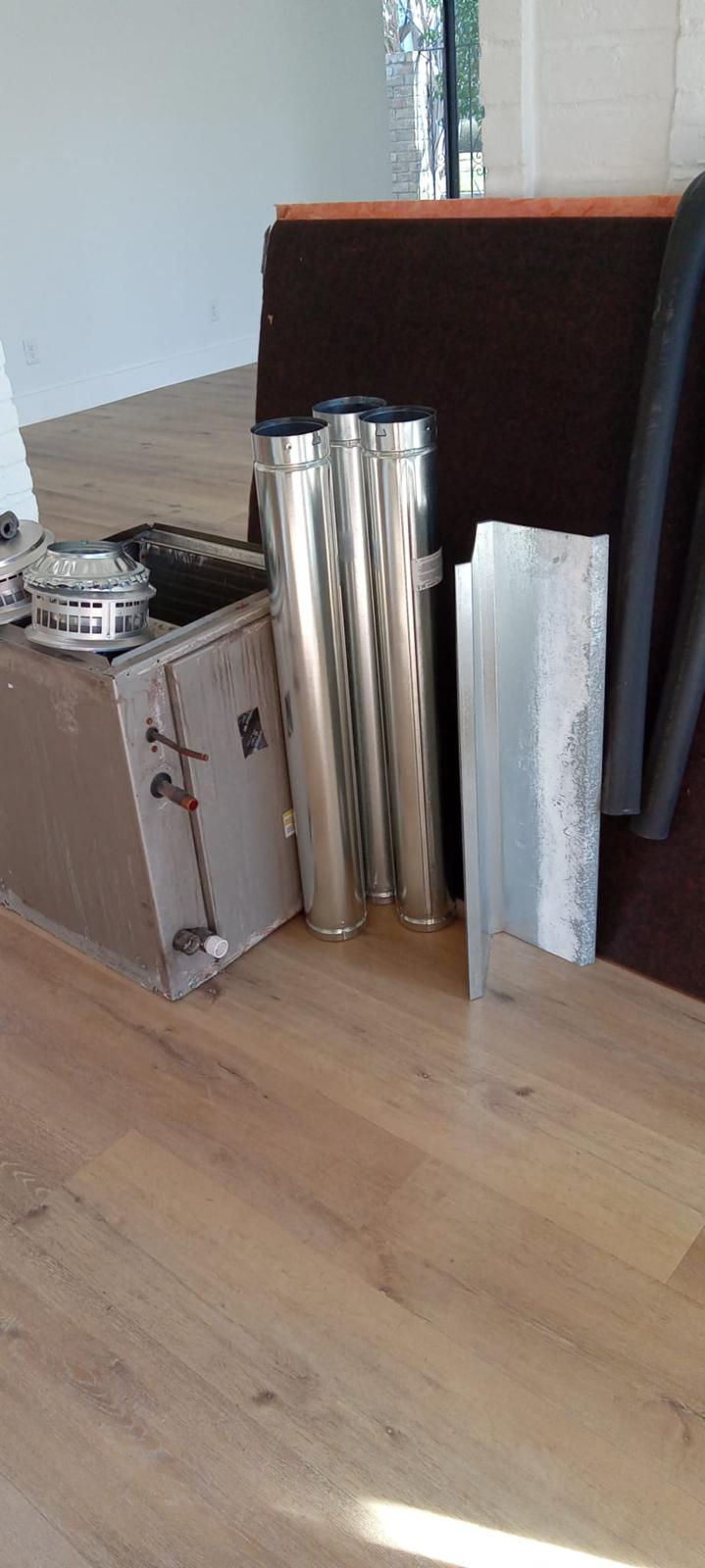
Commercial HVAC machines represent significant capital investments that directly impact your Houston business's comfort, productivity, and operating costs for decades. Understanding the different types of equipment—from rooftop units and chillers to VRF systems and cooling towers—helps you make informed decisions about installation, maintenance, and replacement. This comprehensive guide covers every major commercial HVAC machine type, their ideal applications, costs, and performance characteristics specific to Houston's demanding climate.
Licensed & Insured - TACLB00105442E - Expert Equipment Selection
Understanding Commercial HVAC Machines
Commercial HVAC machines differ fundamentally from residential equipment in scale, complexity, and capability. While a typical Houston home might use a 3-5 ton split system, commercial buildings often require hundreds of tons of cooling capacity distributed across multiple interconnected systems. Understanding these machines helps facility managers, building owners, and business operators make better decisions about their properties.
What Makes Commercial HVAC Different?
Commercial HVAC systems face challenges that residential equipment never encounters. Variable occupancy loads—from empty conference rooms to packed auditoriums—require sophisticated controls. Diverse zone requirements mean some areas need cooling while others need heating simultaneously. Houston's 95°F+ summer temperatures combined with 90%+ humidity push equipment to absolute limits for months at a time.
Commercial machines are built for these demands with:
- Higher capacity components: Industrial-grade compressors, motors, and heat exchangers
- Advanced controls: BACnet, Modbus, and DDC integration for building automation
- Redundancy options: Multiple compressors, fans, and circuits prevent total system failure
- Serviceability: Access panels, monitoring ports, and standardized components ease maintenance
- Longer warranties: 5-10 year parts coverage with extended labor options
Commercial HVAC Machine Categories
Commercial HVAC equipment falls into several distinct categories based on function and configuration:

Rooftop Units (RTUs)
Rooftop units represent the workhorses of commercial HVAC in Houston. These self-contained packaged systems combine heating, cooling, ventilation, and filtration in a single weatherproof cabinet installed on building rooftops. Their popularity stems from installation simplicity, space efficiency, and straightforward maintenance access.
How RTUs Work
A rooftop unit functions as a complete HVAC system in one package. Refrigerant circulates through evaporator and condenser coils to provide cooling. Gas furnaces, electric heat strips, or heat pumps provide heating. Supply fans push conditioned air through ductwork into occupied spaces while return systems bring air back for reconditioning.
Modern RTUs incorporate economizer sections that bring in outside air when Houston's weather permits—typically October through April—providing "free cooling" that can reduce energy consumption by 15-30% annually.
RTU Types and Configurations
- Constant Volume (CV): Single-speed operation, basic controls, lowest cost
- Variable Air Volume (VAV): Modulating airflow for zone control and efficiency
- Make-Up Air Units (MAUs): 100% outside air for kitchens, labs, process exhaust replacement
- Dedicated Outside Air Systems (DOAS): Handle ventilation separately from conditioning
- Heat Recovery Units: Capture exhaust heat/cooling to precondition outside air
RTU Sizing and Capacity
RTU Installation Costs in Houston
Chillers
Chillers serve as the cooling backbone for Houston's largest commercial and industrial facilities. Rather than directly cooling air, chillers produce chilled water (typically 40-45°F) that circulates through air handlers, fan coil units, and other terminal equipment throughout buildings. This centralized approach offers unmatched efficiency and flexibility for facilities exceeding 50,000 square feet.
Chiller Types
Air-Cooled Chillers reject heat directly to outdoor air through condenser coils and fans. They're simpler to install, require no water treatment, and work well for capacities under 500 tons. However, they're less efficient than water-cooled alternatives, especially during Houston's hottest days when outdoor temperatures approach or exceed 100°F.
Water-Cooled Chillers transfer heat to cooling towers for rejection. They achieve 10-30% higher efficiency than air-cooled units and perform consistently regardless of ambient temperature. Water-cooled systems require more infrastructure (cooling towers, condenser water pumps, water treatment) but offer lower lifetime operating costs for larger installations.
Chiller Compressor Technologies
Chiller Plant Design Considerations
Proper chiller plant design for Houston facilities requires careful analysis of peak loads, part-load performance, redundancy requirements, and operational patterns. Key considerations include:
- N+1 Redundancy: Installing capacity beyond peak requirements ensures cooling continues if one chiller fails
- Variable Primary Flow: Modern systems eliminate secondary pumps while maintaining efficient chiller loading
- Chiller Staging: Optimal sequencing maintains efficiency across varying load conditions
- Waterside Economizers: Enable free cooling when ambient conditions permit (limited in Houston)
- Thermal Storage: Ice or chilled water storage reduces peak demand charges
Chiller Installation Costs
*Complete plant includes cooling towers, pumps, piping, controls, and electrical
Boilers
While Houston's mild winters reduce heating demands compared to northern climates, commercial boilers remain essential for many facilities. Boilers produce hot water or steam for hydronic heating, process applications, domestic hot water, and absorption cooling. Understanding boiler types helps Houston business owners make informed decisions about heating equipment.
Boiler Types for Commercial Applications
Hot Water Boilers heat water to 140-200°F for distribution through hydronic heating systems. They're safer than steam, easier to control, and ideal for comfort heating applications. Most Houston commercial buildings with hydronic systems use hot water boilers.
Steam Boilers generate steam at various pressures for heating, humidification, sterilization, and process applications. Hospitals, laboratories, laundries, and food processing facilities commonly require steam. Steam systems demand more operator attention and safety considerations than hot water systems.
Condensing Boilers achieve efficiencies exceeding 95% by recovering latent heat from flue gases. They require return water temperatures below 130°F to condense water vapor from combustion. When properly applied, condensing boilers reduce fuel costs 10-15% compared to conventional equipment.
Boiler Efficiency Ratings
Boiler Sizing for Houston
Houston's climate zone (IECC Zone 2A) requires relatively small heating plants compared to cooling systems. General sizing guidelines:
- Offices: 15-25 BTU/sq ft heating capacity
- Retail: 20-30 BTU/sq ft heating capacity
- Warehouse: 10-20 BTU/sq ft heating capacity
- Healthcare: 25-40 BTU/sq ft heating capacity
A 50,000 square foot Houston office building might require 750,000-1,250,000 BTU/hour heating capacity versus 3-4 times that amount for cooling. This asymmetry often makes heat pump RTUs economically attractive since they provide both functions.
Air Handlers (AHUs)
Air handling units form the distribution network for centralized HVAC systems. They condition and circulate air throughout commercial buildings, working with chillers and boilers to deliver precise temperature and humidity control to multiple zones simultaneously.
Air Handler Components
Commercial air handlers include:
- Supply Fan Section: Centrifugal or plenum fans move air through the system (2,000-100,000+ CFM)
- Cooling Coil: Chilled water or DX coils remove heat and moisture
- Heating Coil: Hot water, steam, or electric coils add heat
- Filter Section: MERV 8-16 filters (higher for healthcare/labs)
- Mixing Box: Combines return air with outside air for ventilation
- Humidifier: Adds moisture in winter (critical for healthcare)
- Energy Recovery: Enthalpy wheels or plate exchangers precondition outside air
Air Handler Types
Air Handler Selection for Houston
Houston's extreme humidity makes dehumidification critical for air handler selection. Key considerations:
- Cooling Coil Rows: 4-6 rows minimum for adequate latent capacity
- Face Velocity: 400-500 FPM for good dehumidification
- Drain Pan Capacity: Oversized pans prevent overflow during peak latent loads
- Corrosion Protection: Coated coils and drain pans resist Houston's humid environment
- Access: Generous access doors for coil cleaning and maintenance

VRF/VRV Systems
Variable Refrigerant Flow (VRF) systems—also called Variable Refrigerant Volume (VRV)—represent the fastest-growing commercial HVAC technology. Originally developed in Asia, VRF systems now dominate mid-size commercial applications worldwide, offering exceptional efficiency, precise zone control, and installation flexibility.
How VRF Systems Work
VRF systems use a single outdoor condensing unit connected to multiple indoor units via refrigerant piping. Variable-speed compressors modulate capacity precisely to match building loads, eliminating the inefficiencies of on/off cycling. Each indoor unit operates independently, providing heating or cooling as needed for its zone.
Heat Recovery VRF systems can simultaneously heat some zones while cooling others, transferring heat from cooling zones to heating zones. This capability proves valuable in Houston buildings where perimeter offices might need heating on winter mornings while interior conference rooms packed with people need cooling.
VRF System Advantages
- Energy Efficiency: SEER ratings up to 25+, IEER up to 24
- Individual Zone Control: Each indoor unit operates independently
- Quiet Operation: Indoor units produce only 19-40 dB
- Compact Installation: Small refrigerant piping replaces bulky ductwork
- Simultaneous Heating/Cooling: Heat recovery moves energy between zones
- Easy Retrofit: Minimal building modifications for existing structures
VRF System Limitations
- Higher First Cost: 15-30% more than equivalent RTU systems
- Refrigerant Charge: Large systems require significant refrigerant quantities
- Specialized Service: Technicians need VRF-specific training
- Piping Limits: Maximum distances between outdoor and indoor units
- Ventilation: Separate DOAS often required for code compliance
VRF Installation Costs
Cooling Towers
Cooling towers reject waste heat from water-cooled chillers, industrial processes, and other equipment. They work by evaporating a small portion of the water to cool the remainder, achieving much lower temperatures than air-cooled condensers. For large Houston facilities, cooling towers enable the efficiency gains that justify chilled water systems.
Cooling Tower Types
Open Circuit (Direct Contact) towers expose condenser water directly to air. Water cascades over fill media while fans draw air through, causing evaporation that cools the water. These towers are efficient and economical but require water treatment to prevent scale, corrosion, and biological growth.
Closed Circuit (Indirect) towers keep condenser water in tubes while spray water evaporates over the outside. They eliminate contamination concerns but cost more and operate slightly less efficiently than open towers.
Hybrid (Adiabatic) towers combine dry cooling with evaporative cooling for water conservation. They're becoming more common in water-restricted areas but rarely necessary in Houston.
Cooling Tower Sizing
Cooling tower capacity matches chiller heat rejection requirements:
- Nominal tons: Tower tons typically equal chiller tons plus compressor heat (approximately 1.2x chiller capacity)
- Design conditions: Houston towers typically designed for 95°F wet bulb, 85°F leaving water
- Approach: 5-10°F difference between leaving water and wet bulb temperature
- Range: 10°F typical temperature drop across the tower
Cooling Tower Maintenance Requirements
Houston's humid climate and warm water temperatures create ideal conditions for Legionella bacteria and other biological hazards. Proper cooling tower maintenance is not optional—it's a safety and regulatory requirement:
- Water Treatment: Chemical treatment program with regular monitoring
- Basin Cleaning: Quarterly minimum, monthly in summer
- Fill Inspection: Annual inspection and cleaning
- Legionella Testing: Periodic testing per ASHRAE 188 requirements
- Drift Eliminators: Annual inspection and replacement as needed
Selecting the Right Commercial HVAC Machine
Choosing appropriate commercial HVAC equipment requires balancing first costs, operating costs, maintenance requirements, and building-specific factors. Here's how different systems compare for typical Houston applications:
Equipment Selection by Building Type
Lifecycle Cost Comparison
First cost represents only 20-30% of total HVAC lifecycle costs. Operating and maintenance expenses dominate long-term economics:
Example based on 10,000 SF Houston office, 2,500 operating hours/year
Our licensed engineers analyze your building's specific requirements to recommend the most cost-effective solution.
Equipment Lifespan Comparison
Frequently Asked Questions
The main types of commercial HVAC machines include Rooftop Units (RTUs) for packaged heating and cooling in a single cabinet, chillers for producing chilled water that cools large buildings, boilers for heating water or generating steam, air handlers (AHUs) for conditioning and distributing air throughout facilities, VRF/VRV systems that provide zoned heating and cooling through refrigerant piping, cooling towers that reject heat from water-cooled systems, and commercial split systems for smaller applications. The best choice depends on building size, usage patterns, budget constraints, and Houston's specific climate requirements including extreme heat and humidity.
Commercial HVAC equipment lifespans in Houston vary by type and maintenance quality. RTUs typically last 15-20 years with proper care, though Houston's extreme cooling demands can reduce this by 10-15%. Chillers achieve 20-30 years—water-cooled models last longer than air-cooled. Boilers last 25-35 years since Houston's mild winters mean light usage. Air handlers typically serve 15-25 years. VRF systems average 15-20 years. Cooling towers can last 20-30+ years with proper water treatment. Houston's extreme heat and humidity accelerate wear on all outdoor equipment, making preventive maintenance especially critical. Well-maintained equipment routinely exceeds these averages, while neglected systems may fail 30-40% sooner.
Commercial HVAC sizing requires professional load calculations that consider square footage, ceiling height, occupancy patterns, internal equipment heat loads, insulation levels, window area and orientation, and local climate data. In Houston, we typically design for 400-600 CFM per ton of cooling and 1 ton of cooling capacity per 300-500 square feet depending on building use—restaurants and data centers need more capacity than warehouses. Oversizing wastes energy and causes humidity problems because systems cycle off before removing adequate moisture. Undersizing leaves spaces uncomfortable during Houston's extreme summer temperatures. HVAC247PRO performs ACCA Manual J and N calculations for accurate, code-compliant sizing.
Commercial HVAC installation costs in Houston vary significantly by equipment type and building requirements. RTUs range from $8,000-$165,000+ installed depending on size (3-50+ tons). Chillers range from $50,000 for small air-cooled units to $500,000+ for large water-cooled systems with complete plant infrastructure. Boilers cost $25,000-$150,000+ installed. VRF systems run $40,000-$550,000+ depending on zone count. Air handlers cost $5,000-$30,000+ each. Total project costs include equipment, installation labor, ductwork modifications, controls integration, electrical upgrades, structural supports, and permits. HVAC247PRO provides detailed quotes with all costs itemized so you understand exactly what you're paying for.
VRF (Variable Refrigerant Flow) systems typically offer the highest efficiency ratings for mid-size commercial applications, with SEER ratings up to 25+ and IEER values exceeding 20. For larger buildings, high-efficiency water-cooled chillers with variable-speed drives and magnetic bearings achieve excellent efficiency at 0.45-0.55 kW/ton. Modern high-efficiency RTUs with variable-speed compressors and ECM motors reach IEER ratings of 18-22+, competitive with VRF for simpler buildings. However, the most efficient choice depends on your specific building—occupancy patterns, zone requirements, and load profiles all affect real-world performance. HVAC247PRO analyzes your usage patterns to recommend equipment that minimizes lifetime operating costs, not just rated efficiency numbers.
Need Help Choosing Commercial HVAC Equipment?
Our licensed engineers can analyze your building and recommend the most cost-effective HVAC solution. Free consultations for Houston businesses.
Need Emergency HVAC Service?
24/7 Emergency Service • 60-90 Minute Response Time • TX License TACLB00105442E
(346) 451-1559Frequently Asked Questions
How often should commercial HVAC systems be serviced?Commercial HVAC systems should be serviced at least twice per year - once before cooling season and once before heating season. High-use facilities may require quarterly maintenance.
What is the average lifespan of commercial HVAC equipment?Commercial HVAC equipment typically lasts 15-20 years with proper maintenance. Rooftop units average 15 years, while chillers can last 20-30 years with regular service.
Do you offer emergency HVAC repair services?Yes, HVAC247PRO provides 24/7 emergency commercial HVAC repair services throughout Houston. Our licensed technicians respond within 60-90 minutes for urgent situations.
Related HVAC Services
AC Repair
Expert commercial AC repair services
AC Installation
Professional AC installation
AC Maintenance
Preventive maintenance plans
All services performed by TX Licensed Contractor TACLB00105442E